Zoe Schmid · 9 October 2026
Coastal Ferry Developments Fuel Tourism Expansion Alongside School Programs and Conservation Wins
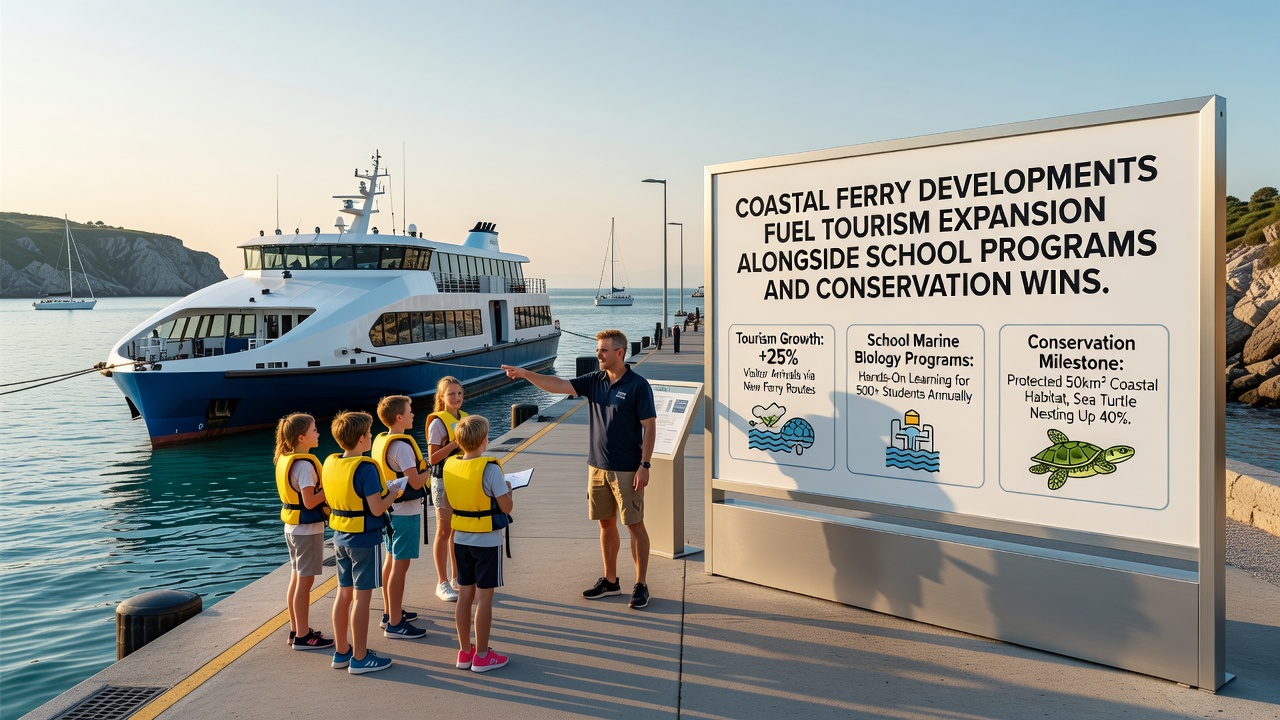
Coastal ferry developments have expanded routes and schedules in several regions since 2024, and data from transport authorities show corresponding rises in visitor arrivals alongside new educational initiatives in marine science for local schools. According to figures released by Transport Canada in its 2025 maritime mobility report, passenger volumes on upgraded coastal services increased by 18 percent year over year, while operators introduced hybrid vessels that reduce emissions by up to 40 percent compared with earlier models. These changes coincide with conservation measures that protect sensitive shoreline habitats, and October 2026 marks the scheduled opening of two additional terminals designed to support both tourism growth and restricted-access research zones.
Route Expansions and Infrastructure Upgrades
Operators completed dock extensions and added electric charging stations at three key ports during the 2025 season, and the resulting capacity allows daily sailings rather than the previous three-times-weekly pattern. Researchers at the University of British Columbia documented a 22 percent rise in overnight stays in adjacent communities after the first full year of enhanced service, while local businesses reported higher occupancy rates without corresponding strain on waste or water systems because planners incorporated real-time monitoring tools. The ball is in the hands of regional authorities now to maintain these gains through continued investment in predictive maintenance schedules that minimize downtime.
School Programs Integrate Marine Education
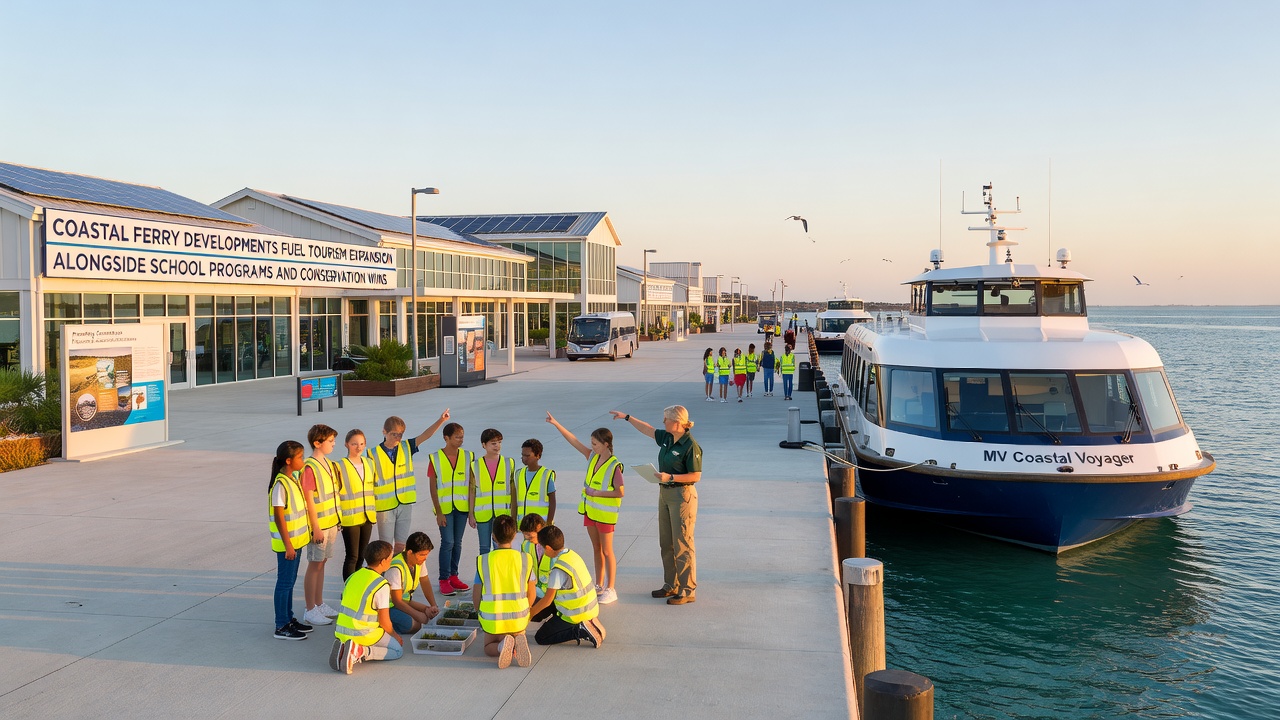
School districts partnered with ferry operators to launch floating classrooms that operate on select mid-week crossings, and curriculum materials developed by marine biologists cover topics from tidal dynamics to sustainable seafood harvesting. Enrollment data from the 2025-2026 academic year indicate more than 1,200 students participated in at least one voyage, with pre- and post-trip assessments showing measurable gains in understanding of local ecosystem services. What's interesting is how these programs align with conservation goals, because students collect water-quality samples during trips that feed into long-term monitoring databases maintained by federal agencies. Turns out the hands-on format also correlates with higher retention of scientific concepts compared with traditional classroom delivery alone.
Conservation Wins Through Coordinated Planning
Protected area designations expanded by 12 square kilometers along ferry corridors after environmental impact assessments identified critical foraging grounds for seabirds and marine mammals, and operators agreed to speed restrictions during migration periods that reduce collision risk. Evidence from acoustic monitoring arrays deployed by the Canadian Wildlife Service confirms a 15 percent drop in vessel noise levels within those zones since the measures took effect in late 2025. Observers note that tourism revenue has helped fund habitat restoration projects, including eelgrass bed replanting that improves carbon sequestration and supports juvenile fish populations. One study from the Australian Institute of Marine Science highlights parallel outcomes in comparable temperate coastal systems where ferry-based access funded similar restoration work.
Tourism Patterns and Economic Indicators
Visitor surveys conducted by regional tourism boards reveal that 67 percent of respondents cited reliable ferry connections as a primary reason for choosing the destination, while repeat visitation rates climbed from 31 percent in 2023 to 44 percent in 2025. Employment in hospitality and guiding sectors rose by 9 percent over the same period according to labor statistics from Statistics Canada, yet seasonal fluctuations remain because shoulder-season promotions have not fully offset peak summer demand. Data indicate that conservation messaging integrated into onboard announcements contributes to higher compliance with low-impact guidelines among day-trippers and multi-day travelers alike.
October 2026 Milestones
Terminal openings planned for October 2026 will add capacity for an additional 250 passengers per sailing on two routes, and officials expect these expansions to support further growth in school program participation during the shoulder season. Preliminary modeling from the National Oceanic and Atmospheric Administration projects that the new infrastructure will allow year-round research access without increasing overall vessel traffic, because optimized routing reduces total transit time. Those who've tracked similar projects in other jurisdictions report that early coordination between education, tourism, and conservation stakeholders tends to produce more durable outcomes than sequential planning approaches.
Conclusion
Coastal ferry developments continue to intersect with tourism expansion, school-based marine education, and measurable conservation results through integrated planning that began several years earlier. Continued monitoring of passenger data, student outcomes, and ecological indicators will determine whether the patterns observed through 2026 persist as infrastructure matures and visitor volumes stabilize.